
Corporate Governance Roundtable
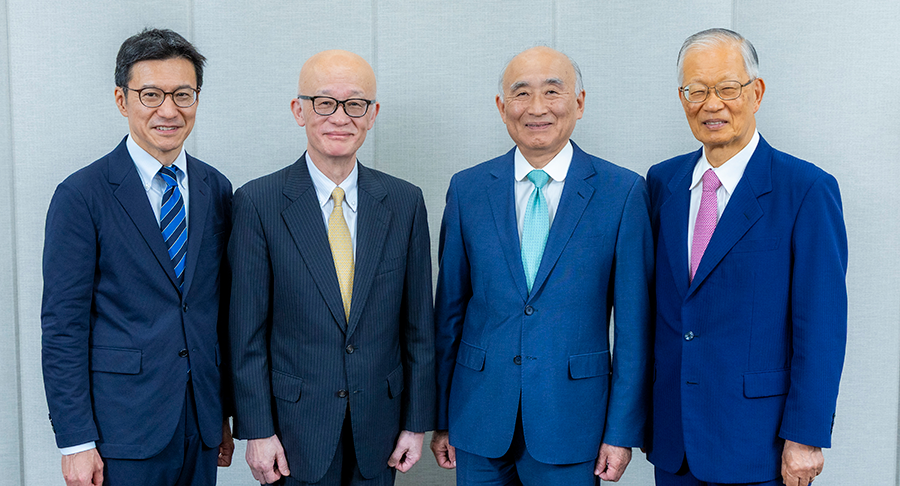
From left to right in the photo
Shigeru Uchigasaki:President and CEO, Human Resources Governance Leaders Co., Ltd. (Facilitator);Toru Kuwano:TISI Chairman and Director (Chairman of the Board of Directors);Mitsuhiro Furusawa:TISI External Director, Chairman of Nomination Committee and Compensation Committee;Yukio Ono:TISI External Director, Audit and Supervisory Committee Member
External directors joined TISI’s Chairman of the Board in a discussion on how to strengthen oversight functions to ensure sustained improvement in corporate value as advancements in AI bring about major changes in the IT services industry environment.
Q.How do you view changes in the industry brought about by advancements in AI?
Shigeru Uchigasaki, President and CEO
Joined Mitsubishi UFJ Trust and Banking Corporation in 2008. With investment from the bank, established HRGL in April 2020, as Japan's first consulting firm focusing on sustainability governance. Serves as a member of the Ministry of Economy, Trade and Industry's Study Group on Corporate Governance for Enhancement of Growth Power and was involved in the formulation of the Five Principles for Board of Directors to Enhance “Growth Power”. Co-author of “Sustainability × Governance.”
Uchigasaki
:Advancements in AI have brought the IT services industry to a major crossroads. In early 2026, concerns spread through the market that AI would disrupt SaaS and IT services business models, which caused the stock prices of domestic and international IT services companies to plummet. This has become known as the “Anthropic shock.”
What is your take on changes in the business environment and the market’s assessment of TISI?
Furusawa :I engaged in dialogue with shareholders and investors several times in fiscal 2026, and I found these stakeholders remained convinced of the Group’s growth potential. That said, the Anthropic shock may have affected the stock price of companies across the industry, but the decline for then-TIS was sharper in comparison—a fact management took very seriously. Concluding that the value of the Group was not being properly assessed, the Board of Directors promptly resolved to repurchase treasury stock and implemented a share buyback as a measure in the best interests of shareholders. However, I said to the Board that a share buyback should be considered a short-term measure and that a growth strategy is really what's most important. On May 8, 2026, management outlined a growth strategy for navigating the age of AI. Continuously sharing information on growth strategy and providing progress updates will allow capital markets to gain a better understanding of the Company, what it does and where it’s going.
Ono :I think the prevailing view—that AI might replace SaaS—has, at least to some degree, prompted concerns about the future of TISI and the corporate group it leads because of the Group’s current emphasis on service-based solutions. But I see AI as an opportunity for the Group to grow and expect the integration of AI into services will enhance the Group’s competitive advantage and its ability to respond flexibly to changes in the business environment. But for TISI to translate such changes into opportunities for growth, we must stay ahead of the competition in communicating how it will utilize AI and what new value it can provide.
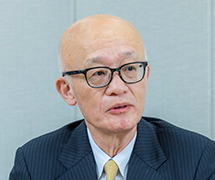
Kuwano :You two hit the nail on the head. Our stock price was undoubtedly impacted more significantly than that of peer companies amid shifting perceptions of the industry as a whole because we failed to fully communicate our growth strategy and progress on this strategy to the market. We have been moving away from a labor-intensive business model in favor of a service-based business model that generates revenue by leveraging our own assets. We are promoting a growth strategy centered on business areas where we have an overwhelming edge, particularly payment settlement services. Our goal is to utilize AI in two ways: 1) to improve productivity and quality, and 2) to enhance the value we provide to clients.
Uchigasaki :Undoubtedly, dispelling concerns in capital markets and translating expectations into corporate value really depend on how well TISI is able to communicate a concrete plan for growth in the age of AI.
Q.What responsibilities must the Board of Directors fulfill to meet its fiduciary duty to shareholders?
Uchigasaki :Can you talk about the status of discussions by the Board of Directors on medium- to long-term management strategies?
Kuwano :On July 1, 2026, TIS and INTEC merged, and we began anew as TISI. This was the perfect time to start working on the next medium-term management plan, which is slated for an April 2027 start. The new plan must outline how AI will contribute to the Group’s value. A top priority for the Board of Directors in the current fiscal year is to closely monitor progress on the draft formulated by executive officers.
Furusawa :I was appointed as an external director of then-TIS in June 2025. Over the past year or so, the Board of Directors has often discussed progress toward objectives stated in the current medium-term management plan. These were, of course, important discussions, but I felt the process could have been more flexible and more welcoming of comments regarding aspects of the plan that might need to be revised. I believe TISI has huge growth potential, given its excellent client base and overwhelming strength in payment solutions. But management must define exactly how TISI will leverage AI within its own structure to turn potential into reality, and this requires the Board to pursue in-depth discussions about growth strategy. I have made my thoughts about this known during opinion-sharing meetings as well.
Ono
:A medium-term management plan is, after all, the foundation upon which the Board oversees the execution of operations. We have been evaluating progress and achievements on a quarterly basis and improving the standards by which we monitor status. But given the increasingly rapid pace of changes in the external environment, I believe it’s part of the Board’s oversight function to ask that plans, even a three-year management plan, be revised if conditions make that necessary.
I also see room for improvement in making Board discussions more efficient. I believe we’d benefit by encouraging members of the Board to voice opinions on high-priority topics, such as the medium-term management plan, even before such subjects become formal agenda items.
Kuwano :Setting the agenda and facilitating active discussions are naturally my responsibility as chairman of the Board of Directors. At TISI, we do have a system in place that enables members of the Board to discuss priority issues in the form of an opinion exchange before such issues are formally submitted as matters for resolution. We could utilize this system more robustly and at an earlier stage in the discussion process to deepen conversations on a comprehensive policy and thereby enhance Board effectiveness.
Uchigasaki :So, executive officers first formulate a comprehensive policy framework, and then the Board of Directors engages in thorough discussion of the appropriateness of such a framework, right? Once approved, the policy is turned over to the executive side for implementation, and the Board monitors the status of implementation. As I understand it then, efforts to enhance the function and effectiveness of the Board hinge on a clear division of roles.
Q.What is the purpose of the transition to a company with an audit and supervisory committee?
Uchigasaki :The transition to a company with an audit and supervisory committee is part of laying the groundwork to accelerate the growth strategy. Could you revisit the reason for the transition?
Ono : I am aware that the transition to a company with an audit and supervisory committee became a topic of interest during discussions on initiatives to reinforce governance. For many years, I worked at an accounting firm and performed audits, mainly for financial institutions, and I have served as an external Audit & Supervisory Board Member of TIS—and now TISI—since June 2020. Given my career background, I initially believed that the existing structure—a company with an Audit and Supervisory Board—would function adequately. However, the merger has expanded the business scale of TISI, which has specific disclosure responsibilities as a listed company and the core company of the Group, and relying solely on the efforts of individual auditors to fulfill core auditing duties has its limits under the new structure, so the need for systematic audits utilizing the internal control system will grow. A company with an audit and supervisory committee is required to conduct systematic audits. TISI will need more effective audits post-merger, and for that reason, the transition to a company with an audit and supervisory committee is certainly the best course of action.
Kuwano :The transition to a company with an audit and supervisory committee brought about a major change in that directors who serve on the Audit and Supervisory Committee now add their voices to resolutions by the Board of Directors.
Furusawa :I believe the transition to a company with an audit and supervisory committee is a strategic move that supports the Board of Directors’ ability to boost the Company’s earning power and at the same time reinforces corporate governance and enhances public trust. As TISI delegates authority to its executive side, the question of whether governance is truly effective assumes greater importance. The transition to a company with an audit and supervisory committee involves establishing both systems, and shareholders and investors will understand the reasons behind this move.
Uchigasaki :By delegating authority to the executive side, TISI will enhance both the quality and speed of executing its growth strategy while also reinforcing the effectiveness of governance through systematic audits. In other words, the Board of Directors will evolve into a structure with the ability to increase the Company’s earning power and support prudent risk-taking.
Q.Describe the kind of management talent that TISI seeks to attract and keep in the age of AI.
Uchigasaki :Will succession planning and investment in human capital change in the age of AI?
Furusawa
:The appointment of top management will remain a priority in organization-building efforts. I was involved in succession planning at the International Monetary Fund through the appointment of top executives and also as an external director at private companies. In my experience, when trying to identify the right person for a top management position, opinions generally align as discussions move along.
AI seems omnipresent these days, extending even to decision-making and management processes, and I believe this is precisely the time when human qualities, such as leadership, become a key factor in the choice of top executives. At TISI, the Nomination Committee is always considering management talent and candidates for top management positions, and I feel the committee functions very well. However, a company is run not by the president alone but rather by an excellent management team. Members of the Nomination Committee and the Board of Directors need deeper insight into the type of management team the president wants to build and the executive structure through which strategies are implemented, and then pursue discussions about management on this basis. Proactive governance requires the Board of Directors to work closely with the management team while entrusting implementation of specific measures to the executive side.
Kuwano
:When the position of president shifted from me to Mr. Okamoto, then-TIS implemented measures that would serve as the template for succession planning today. We arranged interviews with external organizations and conducted 360˚ evaluations of multiple candidates, and through repeated discussions guided by OUR PHILOSOPHY, confirmed each candidate’s approach to management. At the same time, candidates went through more than a year of external coaching, with access to training in management decision-making under various scenarios. It was Mr. Okamoto who impressed us most and who was ultimately selected to assume the position of president. We have continued to refine the approach used back then, and it remains the basis of TISI’s succession planning process today.
We recognize, however, that a key topic for the future is diversification of not only the Board of Directors but also the management team. The characteristics of upper management at TIS differed from those at INTEC, including the age of directors, but the merger has brought together outstanding human resources, allowing us to create an even stronger executive team and Board of Directors under TISI.
Uchigasaki
:So, in addition to the appointment of top management, the composition of the executive team that supports the president as well as cooperation with the Board of Directors are key to proactive governance, right?
Shifting topics here, what are your thoughts on investing in and developing the capabilities of human resources in the age of AI?
Ono :The development of game-changing technologies is nothing new, but I believe we are entering an era in which technological innovation, driven by AI, unfolds much faster than ever before. Organizations with a full complement of AI-literate employees and a large pool of management-level talent capable of responding calmly to the steady stream of innovations are likely to be the organizations that can successfully navigate the new business environment.
Kuwano :To promote the shift toward service-driven business models, TISI has diversified its human resources by adding positions, such as consultants and data analysts, that differ from traditional systems engineers who focus on system development. We also disclose to external stakeholders the metric of operating income per employee, which serves as a key performance indicator reflecting the value of our investment in human resources. But human resources strategies for the age of AI still have to be explored more thoroughly. The Board of Directors will have to carefully consider the business portfolio that TISI wants to build for the age of AI and the talent portfolio needed to achieve it, as well as acquisition of technology and securing talent through M&As.
Furusawa :For an IT company like TISI, investing in human resources is a critical factor that can make or break the business. Post-merger, it’s particularly important that TISI pay attention to personnel assignments and evaluation. There have been cases at other companies where post-merger integration took too long, and top talent simply left, a loss of human capital those companies could ill afford. The expectation is that TISI will cultivate an environment that leverages talent more effectively than ever before, and I’m sure the executive team will adopt this perspective as well.
Uchigasaki :A human resources strategy that includes investment in human resources as well as building a management team primed for the age of AI will be the source of TISI’s earning power. This is definitely a topic that the Board of Directors should routinely be talking about in conjunction with growth strategy.
Q.What are your thoughts on management indicators that measure corporate value?
Uchigasaki :TISI considers the price-to-book ratio (PBR) to be a key indicator of improvement in corporate value. While the Company has steadily implemented the medium-term management plan, achievements haven’t been fully reflected in stock price. What are your thoughts on indicators for measuring corporate value?
Ono :Stock price isn’t the be-all and end-all, but since TISI is listed on the Prime Market, management must be mindful of stock price from the perspective of fiduciary duty to shareholders. The Board of Directors previously considered using stock price as a management indicator but decided against it because adopting technical measures that only temporarily boost stock price was deemed an unsavory tactic and thus to be avoided. But a market evaluation ultimately reflects all aspects of a company, including services, technological capabilities and human resources. Given the recent decline in TISI’s stock price, I think management should look inward into possible contributing factors within the Company that may have heightened the impact of external factors, and take appropriate action to turn this challenging environment into an opportunity for improvement.
Kuwano :Various metrics exist for measuring corporate value, but I have always placed a high priority on revenue per employee. In OUR PHILOSOPHY, we define growth as enhancing the exchange of value with stakeholders, and along with shareholders, investors and clients, employees are one of our most important stakeholder groups. I believe that increasing revenue per employee will fuel TISI’s growth and at the same time lead to improvements in employee compensation, job satisfaction and our credibility in society.
Furusawa :When I think of corporate value, ROE, PER and PBR spring to mind. But I also believe that being recognized by society as an indispensable part of the social infrastructure is a form of corporate value. For example, a growing number of young people prioritize job satisfaction, and I believe that some aspects of corporate value cannot be expressed in numbers
Uchigasaki :Corporate value is not determined solely by stock price and PBR. The fact that TISI’s business activities support social infrastructure and the fact that employees take pride in their work are also key components of corporate value. President Okamoto once said, “I am asked about the kind of future we envision for ourselves, our end destination and how we will get there, and whether our picture of the future is realistic, whether we have the wherewithal to succeed.” Shareholders and investors also want to know what kind of future TISI has pictured for itself and the methods that will make the vision a reality. I feel it’s important for the Board of Directors to set a direction for the Company to follow and promote dialogue with capital markets.
Q.What roles would you all like to play going forward?
Ono :The transition to a company with an audit and supervisory committee isn’t an endpoint for strengthening corporate governance—it’s a new starting point. As a member of the Audit and Supervisory Committee at TISI, I will strive to ensure positive results under the new structure, which I hope will ultimately lead to enhanced corporate value.
Furusawa :Changes in the business environment, the merger that created TISI, and initial steps on formulating the next medium-term management plan all occurred at just the right time. The Board of Directors serves in a supervisory capacity, but my intention is to work with the executive team to create plans and, by sharing responsibility, transform the challenges that currently characterize the business environment into opportunities for growth.
Kuwano :I am once again reminded of the pivotal role that I, as chairman of the Board of Directors, play in ensuring that the Board fully demonstrates its stated function. Having served in an executive capacity myself, I understand the challenges faced by executives and the practical issues involved in implementing strategies, and I remain firmly committed to ensuring substantive and lively discussions at board meetings.
Uchigasaki :My impression from our conversation today is that the Board of Directors is determined to support the management team and ensure that TISI earns the trust of capital markets as the Company approaches a major crossroads, with the aim of achieving sustainable improvement in corporate value. Stakeholders and capital markets can expect TISI to realize further growth as a partner supporting social change. Thank you.
September 30, 2026